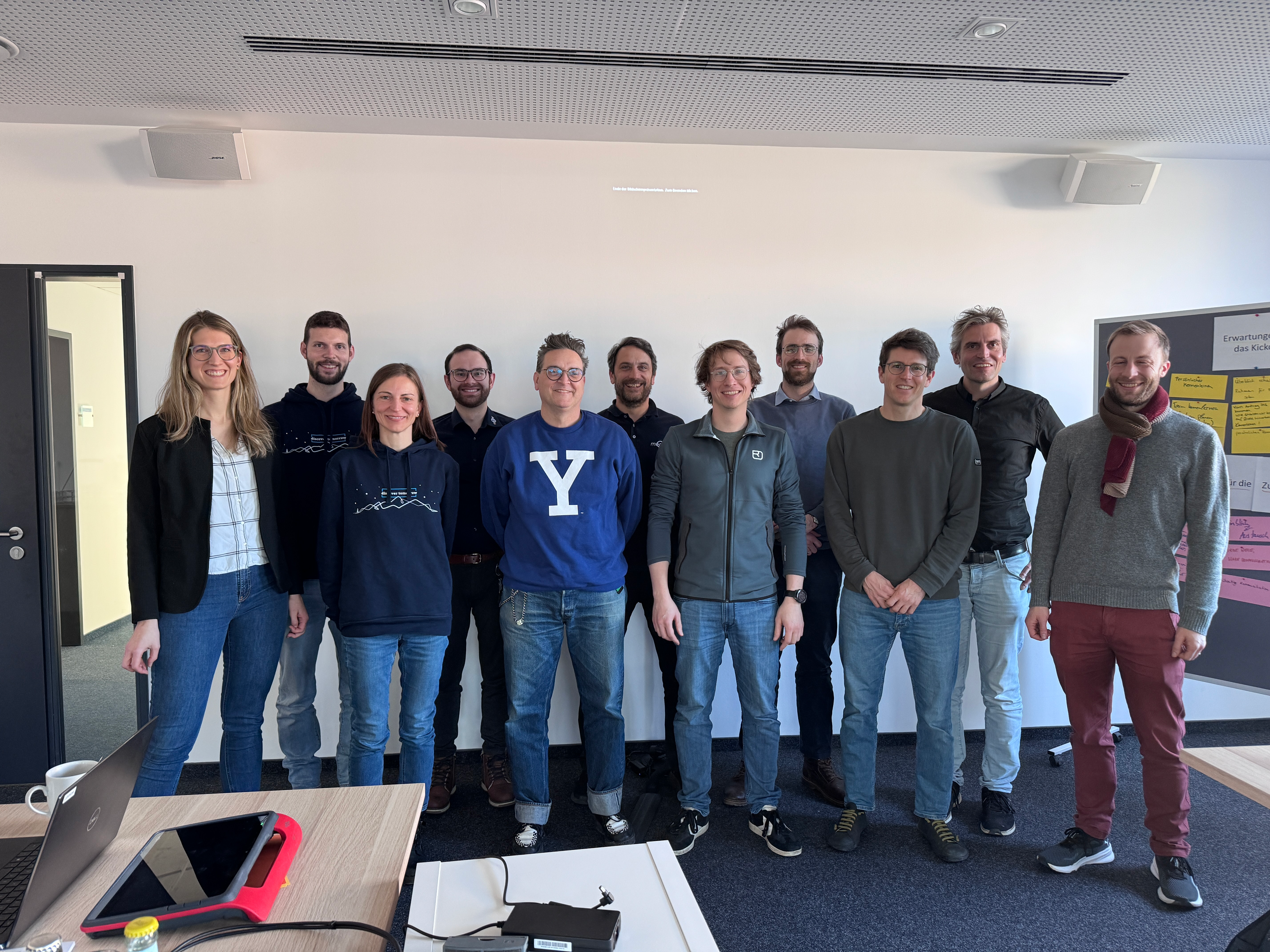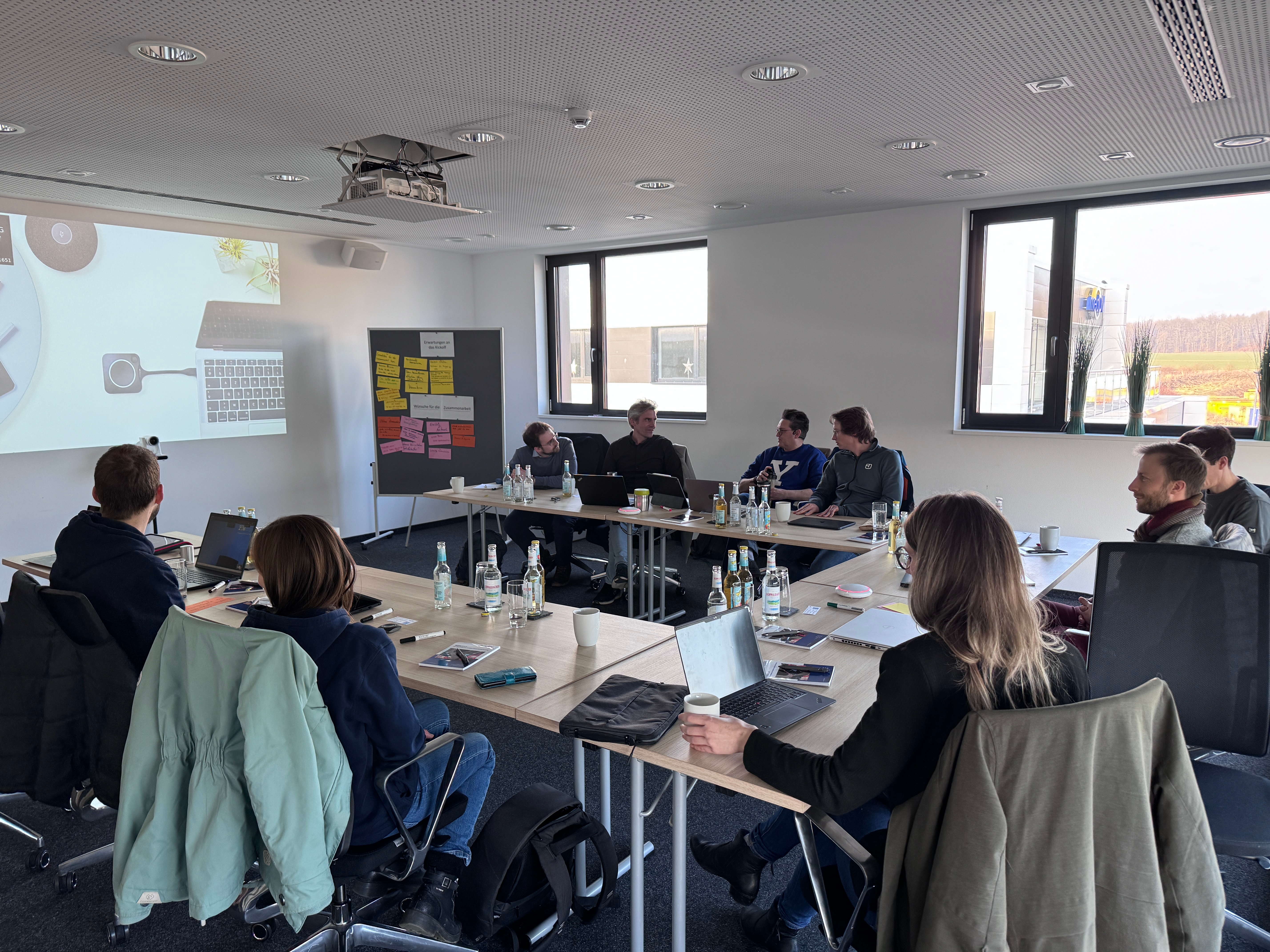
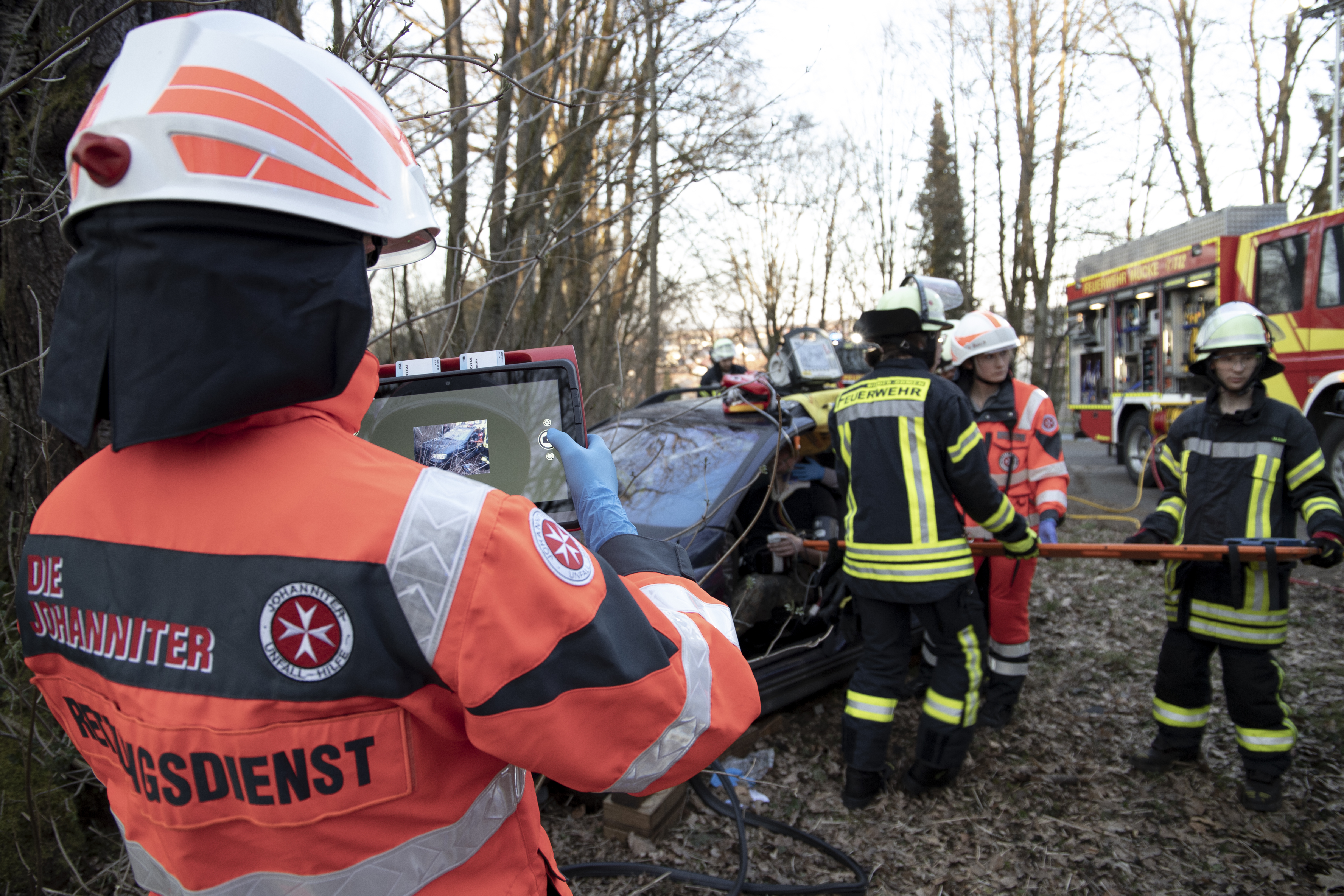
The NIDAaiD research project, funded by the German Federal Ministry of Research, Technology, and Space (BMFTR), uses AI algorithms to improve emergency care for car accident victims. The aim is to process information from the accident site in a structured manner and visualize it in the emergency room so that emergency physicians and emergency room teams can prepare for patients early and in a targeted manner. The project is being funded with a total of €1.3 million. The kick-off meeting for the project took place yesterday at medDV GmbH in Fernwald.
Based on data already available from the NIDApad, NIDAaiD analyzes accident images, vital signs, symptoms, and treatment measures in real time. AI models predict possible injuries and the hemodynamic stability of patients. This information, together with the documented data, is visualized in diagnosis- and treatment-relevant pathways for the emergency room and seamlessly integrated into existing workflows.
The Chair of Psychological Ergonomics at the University of Würzburg is investigating usage contexts, designing the interaction design, and evaluating NIDAaiD in simulation studies. medDV GmbH is responsible for consortium management and technical implementation. Medical expertise is provided by the Clinic and Polyclinic for Anesthesiology, Intensive Care Medicine, Emergency Medicine, and Pain Therapy at the University Hospital of Würzburg (UKW), while the AI forecasts are developed by Prognostica GmbH. Funding will run until 2028.